

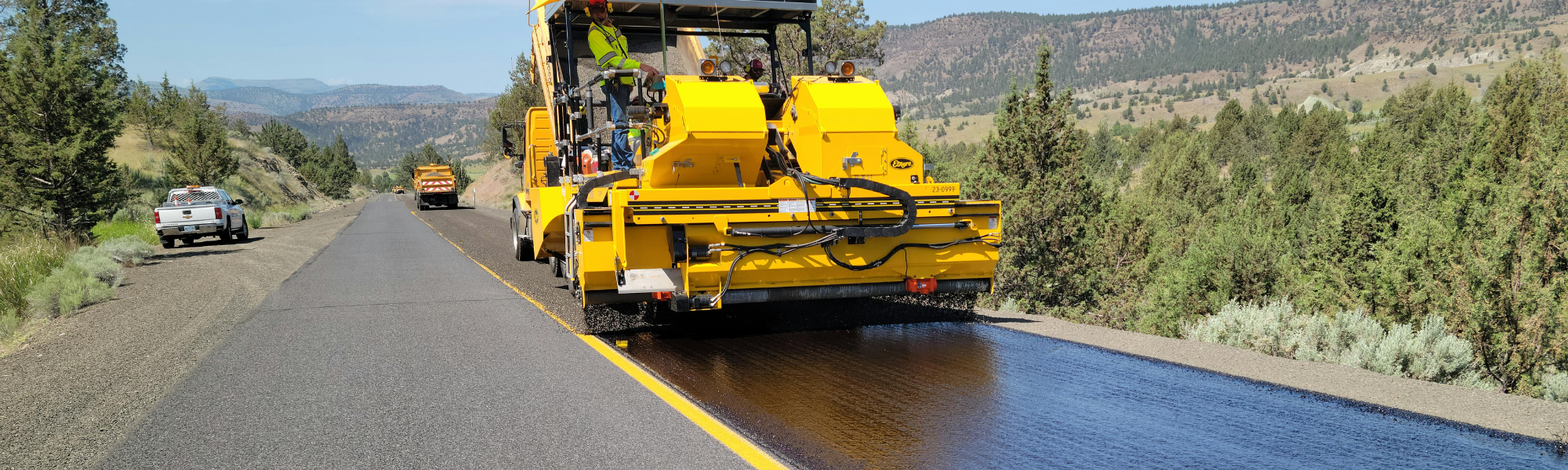
On 2 July 2026, EaP RSO hosted a webinar on the theme of "Future-Ready Roads: Strategies and Tools for Smarter Infrastructure and Maintenance Management."
Delivered by Egidijus Skrodenis, Senior Road Safety Consultant at EaP RSO and former Director of the Road Safety Department at the Lithuanian Road Administration, the session led participants through the often-overlooked link between road maintenance and road safety, and set out the strategies, contracting models and technologies needed to keep infrastructure fit for an increasingly connected and demanding generation of road users.
Through the session, Egidijus explained that maintenance and safety have historically been treated as competing priorities, since every safety measure, from roundabouts to speed bumps, adds to the maintenance bill. Most countries, including Lithuania, have resolved this tension by giving road safety legal priority, with maintenance budgets and practices adapted accordingly.
Egidijus opened by placing maintenance within the Safe System hierarchy, noting that it ranks just behind human behaviour and road design in its influence on crash risk, and that poor pavement quality alone can raise crash probability by around 85%. He distinguished maintenance, i.e. routine preservation such as pothole repair and crack sealing, from rehabilitation and reconstruction, and walked through the range of funding and delivery strategies available to road administrations, from reactive and preventive approaches to predictive, data-driven models informed by sensors and asset-management systems.
A central theme was the shift toward performance-based contracting, used widely in Scandinavia and the Baltics, where contractors are paid to deliver defined outcomes. Egidijus also set out the case for stable, multi-year funding, illustrating this with Lithuania's road fund model and its 2017 reform, which merged eleven regional maintenance companies into one to cut overheads and concentrate resources on upkeep.
Looking ahead, the session traced how road infrastructure is evolving from the asphalt era of the 1950s toward connected and self-monitoring digital assets by the 2030s and 2040s, in support of the wider 2050 zero-fatality ambition. Egidijus highlighted how connected, automated and electric vehicles are already raising the bar for maintenance quality, requiring higher-specification markings, communicating signage and reliable drainage, and described tools now entering use across the sector, including drones, AI-assisted inspection, weigh-in-motion systems and vehicle-mounted sensors for winter road-condition monitoring.
The Q&A turned to a practical challenge with a question concerning road markings that fade within months. Egidijus explained the gap between paint markings, which offer no retroreflection and a roughly six-month lifespan, and plastic markings with embedded glass beads, which typically carry a four-year warranty, and recommended that countries move toward quality plastic markings procured through performance-based contracts.
The webinar forms part of EaP RSO's ongoing capacity-building programme for road safety professionals across Armenia, Azerbaijan, Georgia, Moldova and Ukraine. The topic of this webinar was requested as a core area of learning by national stakeholders and counterparts in the EaP member countries. For latest details about upcoming webinars and learning opportunities, check out our News and Events page.


