

Across the Eastern Partnership region, Armenia, Azerbaijan, Georgia and Moldova have used the iRAP Star Rating for Schools (SR4S) Methodology to assess the safety of school zones around nearly 100 schools and inform evidence-based improvements.
The approach is part of the global SR4S programme making a life-saving impact in 84 countries, and supports the Eastern Partnership Road Safety Observatory’s commitment to strengthening road safety data and using evidence to guide investment and policy.
Rather than relying solely on crash history, SR4S provides a systematic way to measure the safety of infrastructure around schools, helping local authorities to identify critical infrastructure and speed-management priorities, and implement targeted interventions.
In Armenia, 40 schools in Gyumri and Vanadzor have been assessed using SR4S by the Armenian Automobile Federation (FAA), in collaboration with the Armenian Association of the Official Representatives of Automobile Manufacturers (AORA). The assessments helped identify priorities for action, with two school zones subsequently upgraded to 4- and 5-star safety levels through safer crossings and improved speed management.
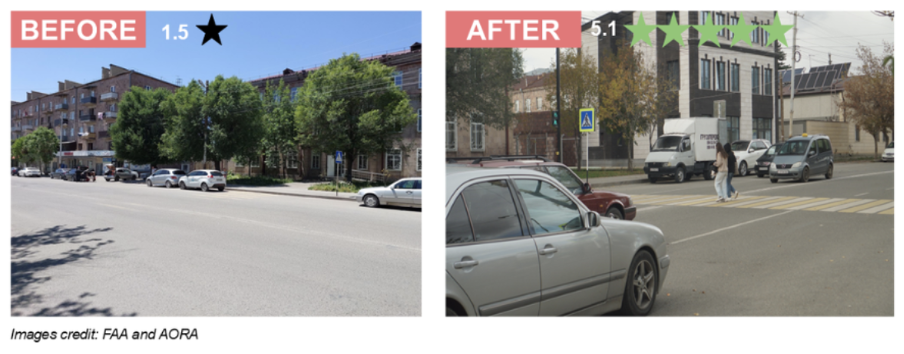
Gyumri Community School No. 24 before and after evidenced-based infrastructure improvements informed by SR4S
“We are committed to creating safer environments for Armenia’s children,” said Artyom Petrosyan, FAA’s Road Safety and Mobility Expert. “This initiative is a vital step towards ensuring that every school zone in our country is a safe space for students to learn and grow.”
In Moldova, the Automobile Club of Moldova (ACM) has assessed 24 schools using SR4S, and in 2024 earned both the Vision Zero for Youth International Leadership Award and a prestigious Prince Michael International Road Safety Award for its advocacy, supported by EASST and the FIA Foundation, to establish speed limits of 30km/h in areas where traffic intersects with vulnerable users, especially around schools. SR4S assessments have provided evidence to support these efforts.
In Balti, Singerei and Ungheni, ACM assessments of nine schools led to improvements at three school zones, with upgraded locations reaching 4- and 5-star safety levels, particularly through safer pedestrian crossings.
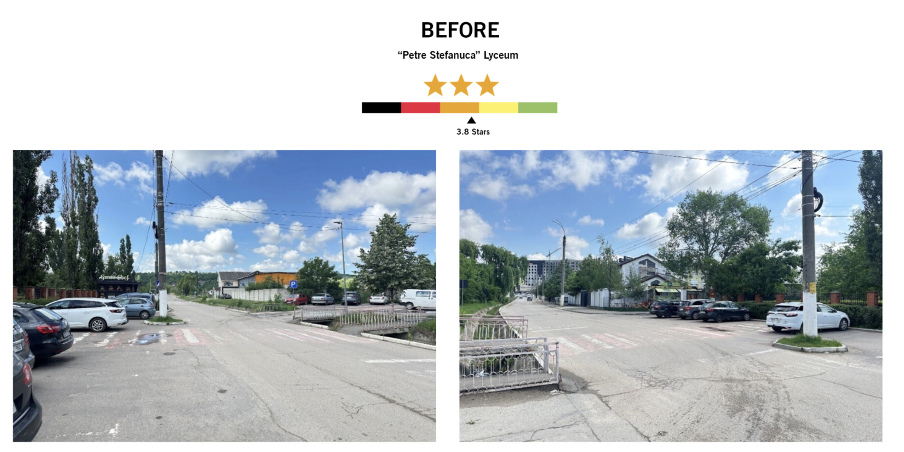
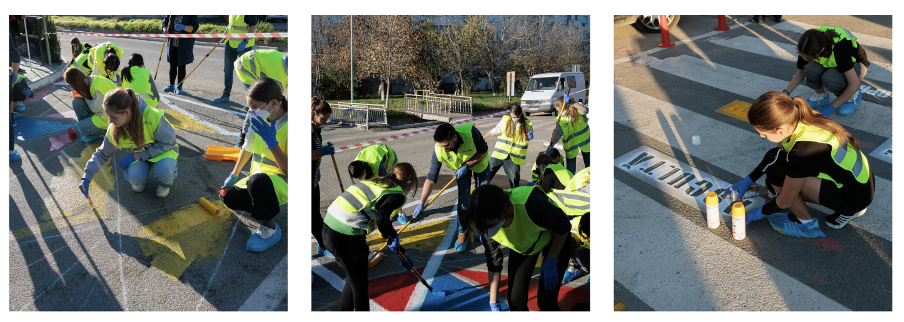
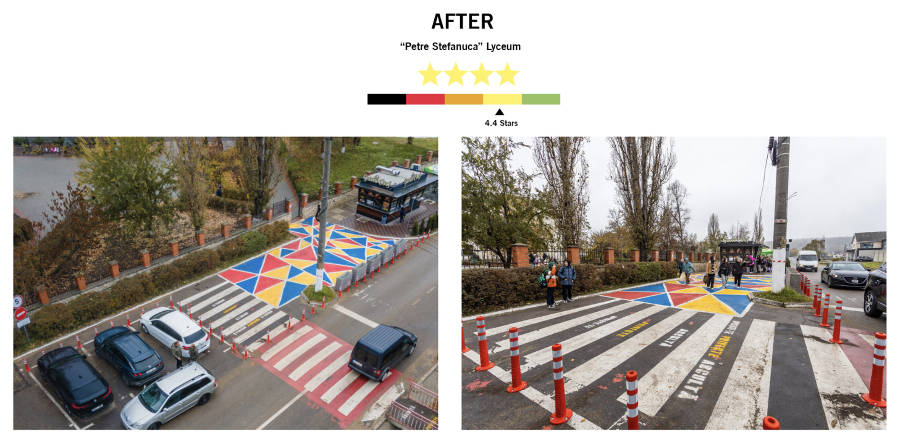
School zone improvements at Petre Stefanuca Lyceum in Ialoveni, Moldova
In Georgia, 11 school zones in Tbilisi and Zugdidi have been assessed using SR4S. The FIA Road Safety Grants Programme and the FIA Foundation together supported EASST, Partnership for Road Safety (PfRS), and the Georgian Automobile Sport Federation (GASF) to upgrade four school zones informed by SR4S recommendations.
Each of the four schools lacked traffic calming or safe crossing infrastructure and had speed limits that far exceeded the WHO recommended 30km/h for areas where vulnerable road users and traffic mix.
The local road authorities worked with PfRS, GSAF, and the school communities to develop new road designs and countermeasures for each school zone based on international best practice. Speed limits were reduced to 30 km/h, and high visibility signage, speed humps and zebra crossings were installed.
In Azerbaijan, 22 schools have been assessed supported by the National Automobile Club of Azerbaijan (AMAK). AMAK, in partnership with the FIA Foundation and EASST, has implemented strategic school zone upgrades including around School Nr. 4 in Sumgayit City. The improvements increased the safety of the school entrance to 4.6 stars, positively impacting over 2,000 students.
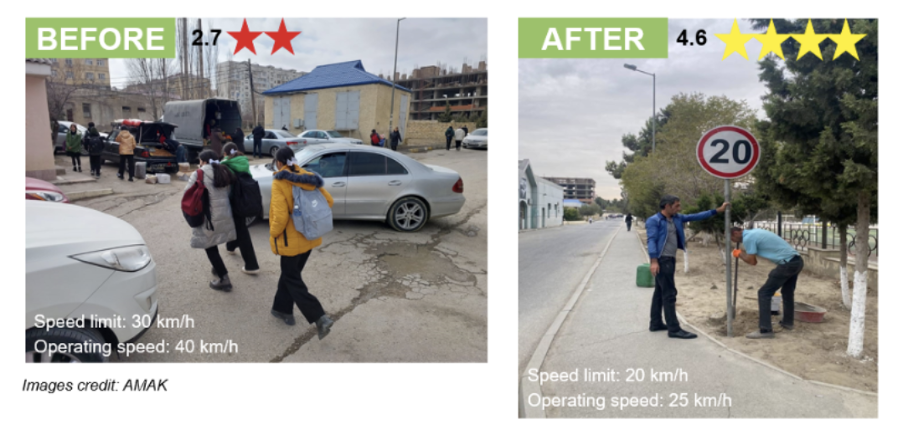
Evidence-based improvements around School No. 4 in Azerbaijan included speed reductions, the installation of speed bumps, pedestrian crossing signage, and traffic bollards to manage vehicle and pedestrian flows around the school
In addition to physical infrastructure upgrades, AMAK expanded its road safety outreach to children across Baku and Sumgayit. Partnering with the Baku City State Traffic Police Department, Children-Youth Development Center No. 1, and the AMAK Sumgait Youth House, AMAK organized a series of road safety training events designed to instil safe road behaviours in young students.
Star Rating for Schools is providing a common, measurable framework for understanding the risks children face on their daily journeys, prioritising strategic investment, and demonstrating the impact of improvements. It also helps bring schools, communities, civil society, local authorities and road agencies together around a shared goal: ensuring every child can get to and from school safely.
The programme has effectively complemented wider efforts to improve school-zone safety through speed management in the region, including through the adoption of 30 km/h school zones and targeted infrastructure improvements.
The experience of Armenia, Azerbaijan, Georgia and Moldova demonstrates the value of moving from assessment to action – using better evidence to target investment where it is needed most and progressively create safer, more inclusive school zones.
For the Eastern Partnership Road Safety Observatory, initiatives such as these demonstrate how reliable, comparable road safety evidence can support practical decision-making and contribute to the region’s goal of reducing road deaths and serious injuries by 50% by 2030.
For more information on how Star Rating for Schools can support safer school journeys in your community, visit starratingforschools.org.


